Lest We Forget: Thaddeus Stevens, Local Hero
And a Magical, Teachable Moment for our Grandchildren

This week, two of our granddaughters are visiting us in Lancaster; this is a rare event because of their somewhat complicated family situation (they were last here 7 years ago, though we travel to Wisconsin to see them every few months). They are 14 and 13 years old, just back from two weeks at summer camp in western PA. In searching for things to keep them occupied amidst a brutal heat wave, we took them on Tuesday morning to Lancaster’s newest museum, the Thaddeus Stevens & Lydia Smith Center for History and Democracy.
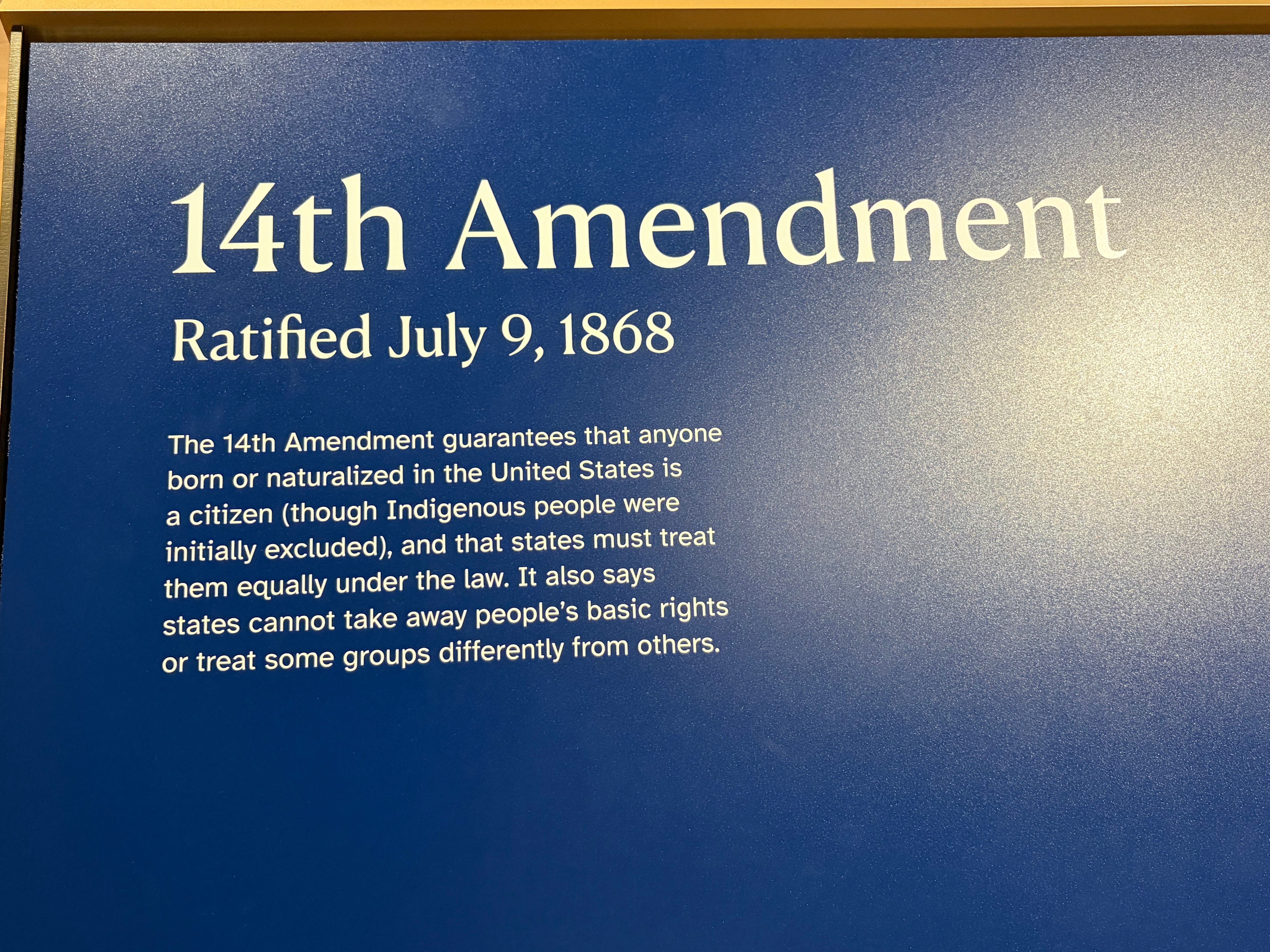
Thaddeus Stevens’s story is too-little known, and the new museum is meant to remedy that. The short version is that Stevens was born into extreme poverty (In Danville, Vermont) and also suffered with a congenital club foot, both of which seemed to have given him an amazing ability to empathize with “the least of these”—which, eventually, meant the enslaved. After some financial set backs, he moved from Gettysburg to Lancaster in 1843, established a successful law practice, and was elected to the U.S. Congress, first as a Whig in 1849 (losing his seat as a result of his fierce opposition to the Fugitive Slave Act of 1850), and then as a Republican in 1858. He was an important ally of President Lincoln, and was the major force in the passage of the 13th Amendment (abolishing slavery), the 14th Amendment (birthright citizenship, equal protection, and due process), and the 15th Amendment (giving Black men the right to vote—he himself favored women’s suffrage but that was not yet politically feasible), the Constitutional Amendments that together were responsible for the so-called “second founding.” Partially influenced by local Quaker abolitionists, he continually pushed Lincoln to go farther in his embrace of the abolition of slavery and equal protection. Much of his legacy was undermined by the end of Reconstruction and the subsequent Jim Crow era (he was portrayed as a villain in the 1915 Birth of a Nation), but has gained positive attention in recent decades (as portrayed in the 2012 Steven Spielberg movie, Lincoln). Lydia Smith was a mixed-race woman who was initially Stevens’ housekeeper, but became his political manager, business partner, and, toward the end of his life, his nurse, and went on after Stevens’ death in 1868 to become a successful landowner and businesswoman in Washington D.C.
Around 2000, the site of Stevens’s home and law office in downtown Lancaster was dilapidated and scheduled to be torn down, to make room for a new convention center. But with the persistence of local preservationists and the Lancaster Historical Society, the building was preserved and eventually incorporated into the new convention center. It took twenty years of planning, fund raising, and major renovations, but the Thaddeus Stevens & Lydia Smith Center for History and Democracy opened in May of this year.
On Tuesday (June 30), we took our two granddaughters to the new museum. We started with exhibitions about his early life, and about life in Lancaster in the years leading up to the Civil War. Lancaster is just twenty miles from the Mason Dixon Line, so in those days was a hotbed of political activity and abolitionist sentiment. There was a major exhibition on the Underground Railroad, which brought Stevens into frequent contact with both the large free Black population and Quaker abolitionists. We ended up in the culminating exhibition, which highlights Stevens’s pivotal role in the passage of the 13th, 14th, and 15th Amendments to the Constitution. We were literally reading about his role in the 14th Amendment, when the staff came in and starting putting up balloons: the news had just come in that the Supreme Court that very morning had voted to uphold birthright citizenship.
What was magical was seeing our granddaughters realize that this was not just history—it was relevant to our present politics. The rest of the exhibit, connecting the 14th Amendment to the subsequent Civil Rights movement, previous battles over birthright citizenship, women’s suffrage, and many other political movements, now struck them as much more relevant than they previously realized. We could almost see the light going on in their minds!
“The past is never dead. It is not even past. All of us labor in webs spun long before we were born, webs of heredity and environment, of desire and consequence, of history and eternity.” –William Faulkner
A hundred fifty years on, we continue to fight the same battles that Thaddeus Stevens and Lydia Smith fought, albeit in different forms. May they be an inspiration to us—as they are now to our granddaughters.